

flower
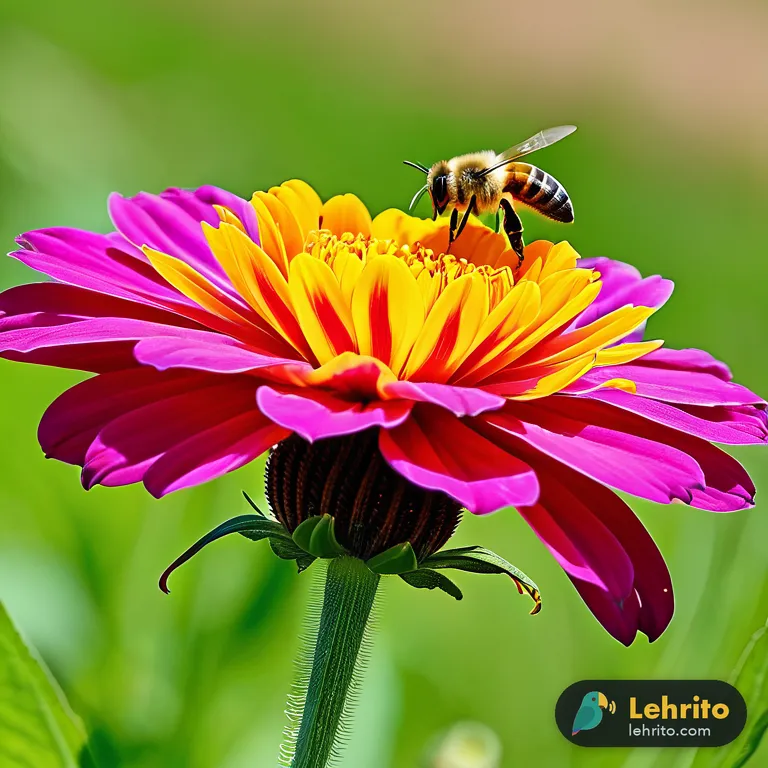
Definición
The seed-bearing part of a plant, consisting of reproductive organs (stamens and carpels) that are typically surrounded by a brightly coloured corolla (petals) and a green calyx (sepals)
flor
Para recordarlo
Imagina los pétalos vibrantes y coloridos de esta flor. Recuerda 'flor' pensando en su apariencia brillante y hermosa.
Ejemplos
- A1
She bought a bunch of flowers from the market on her way home from work to brighten up the living room — the sunflowers and roses she chose were her favourites, and seeing them in the vase when she got home instantly made the flat feel warmer and more welcoming.
Compró un ramo de flores en el mercado camino a casa del trabajo para alegrar la sala de estar: los girasoles y las rosas que eligió eran sus favoritas, y verlas en el jarrón cuando llegó a casa hizo que el piso se sintiera instantáneamente más cálido y acogedor.
- A1
The garden was full of beautiful flowers in early summer — roses of different colours, lavender, poppies, and marigolds all blooming together to create a riot of colour and fragrance that attracted bees and butterflies throughout the warm days.
El jardín estaba lleno de hermosas flores a principios del verano: rosas de diferentes colores, lavanda, amapolas y caléndulas floreciendo juntas para crear una explosión de color y fragancia que atraía abejas y mariposas durante los cálidos días.
- A2
Many plants produce flowers as part of their reproductive strategy — the flowers attract pollinators such as bees, butterflies, moths, and hummingbirds with their colours, shapes, and scents, and the pollen carried by these visitors from flower to flower enables fertilisation and the production of seeds for the next generation.
Muchas plantas producen flores como parte de su estrategia reproductiva: las flores atraen a los polinizadores como abejas, mariposas, polillas y colibríes con sus colores, formas y fragancias, y el polen transportado por estos visitantes de flor en flor permite la fecundación y la producción de semillas para la siguiente generación.
- A2
She had been learning about flower arranging and was proud of the arrangement she had created for the dining table — she had learned to consider not just colour and size but also texture, shape, and the relationship between different elements, and the result was something she found genuinely pleasing to look at.
Había estado aprendiendo sobre el arreglo floral y estaba orgullosa del arreglo que había creado para la mesa del comedor: había aprendido a considerar no solo el color y el tamaño, sino también la textura, la forma y la relación entre los diferentes elementos, y el resultado era algo que encontraba genuinamente agradable de mirar.
- B1
The flower industry operates on a global supply chain that is rarely visible to consumers — the majority of cut flowers sold in Europe and North America are grown in countries like Kenya, Ethiopia, Colombia, and Ecuador where land, labour, and growing conditions are cost-competitive; transported by air freight to maintain freshness over very long distances; and distributed through wholesale markets before reaching florists and supermarkets within a narrow time window before the flowers begin to deteriorate.
La industria de las flores opera en una cadena de suministro global que rara vez es visible para los consumidores: la mayoría de las flores cortadas que se venden en Europa y América del Norte se cultivan en países como Kenia, Etiopía, Colombia y Ecuador, donde la tierra, la mano de obra y las condiciones de cultivo son competitivas en costo; se transportan por carga aérea para mantener la frescura durante largas distancias; y se distribuyen a través de mercados mayoristas antes de llegar a floristas y supermercados dentro de una estrecha ventana de tiempo antes de que las flores comiencen a deteriorarse.
- B1
The ability of some flowering plants to flower at specific times of year regardless of temperature — determined by day length rather than temperature (a phenomenon called photoperiodism) — was an important horticultural discovery that allows growers to manipulate flowering time by controlling the artificial light conditions plants are exposed to, enabling year-round production of species that would naturally only flower in certain seasons.
La capacidad de algunas plantas con flores de florecer en momentos específicos del año independientemente de la temperatura (determinada por la duración del día en lugar de la temperatura, un fenómeno llamado fotoperiodismo) fue un importante descubrimiento hortícola que permite a los cultivadores manipular el tiempo de floración controlando las condiciones de luz artificial a las que se exponen las plantas, lo que permite la producción durante todo el año de especies que naturalmente solo florecerían en ciertas estaciones.
- B2
The symbolic language of flowers — known as floriography — was a cultural system popular in Victorian Britain and other nineteenth-century European societies in which different flowers and their colours carried specific meanings that could be communicated in bouquets sent between correspondents who shared knowledge of the code: red roses for love, yellow roses for friendship or jealousy, white lilies for purity, forget-me-nots for true love and remembrance, and so on.
El lenguaje simbólico de las flores (conocido como floriografía) fue un sistema cultural popular en la Gran Bretaña victoriana y otras sociedades europeas del siglo XIX en el que diferentes flores y sus colores llevaban significados específicos que podían comunicarse en ramos enviados entre correspondientes que compartían el conocimiento del código: rosas rojas para el amor, rosas amarillas para la amistad o los celos, lirios blancos para la pureza, miosotis para el amor verdadero y el recuerdo, etcétera.
- B2
The ecological function of flowers in plant reproduction involves a remarkable co-evolutionary history between flowering plants (angiosperms) and their animal pollinators: the extraordinary diversity of flower shapes, colours, and scent compounds reflects millions of years of selection for features that attract specific pollinators (long tube flowers for hummingbirds, ultraviolet-patterned flowers for bees, night-scented flowers for moths) while also deterring non-pollinators who would consume nectar without effecting pollination.
La función ecológica de las flores en la reproducción de las plantas involucra una notable historia coevolutiva entre las plantas con flores (angiospermas) y sus polinizadores animales: la extraordinaria diversidad de formas de flores, colores y compuestos de aroma refleja millones de años de selección por características que atraen a polinizadores específicos (flores de tubo largo para los colibríes, flores con patrones ultravioleta para las abejas, flores perfumadas nocturnas para las polillas) al tiempo que disuade a los no polinizadores que consumirían néctar sin efectuar la polinización.


