

flower
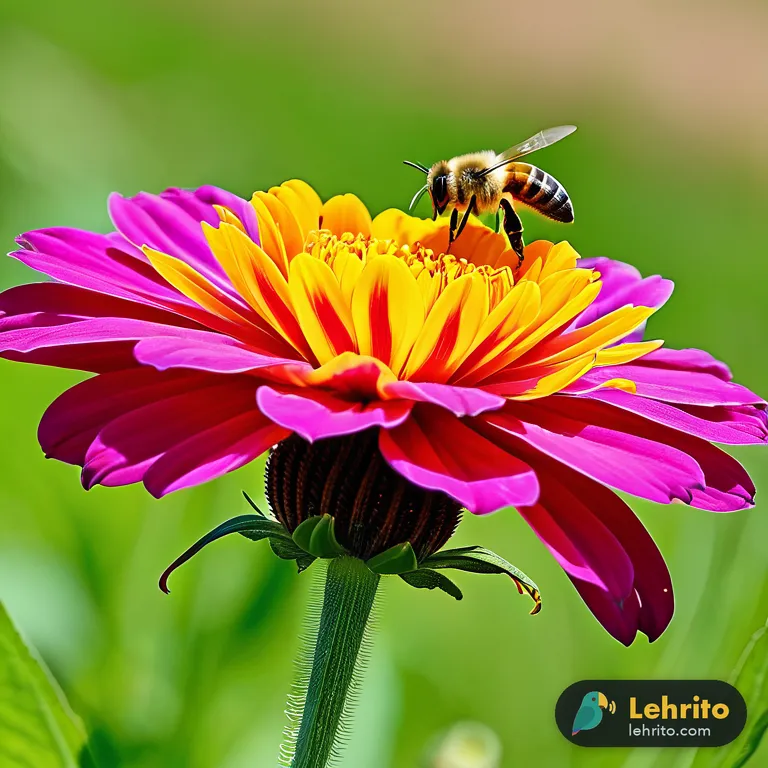
Definition
The seed-bearing part of a plant, consisting of reproductive organs (stamens and carpels) that are typically surrounded by a brightly coloured corolla (petals) and a green calyx (sepals)
To remember it
Picture the vibrant, colorful petals of this flower. Remember 'flower' by thinking of its bright and beautiful appearance.
Examples
- A1
She bought a bunch of flowers from the market on her way home from work to brighten up the living room — the sunflowers and roses she chose were her favourites, and seeing them in the vase when she got home instantly made the flat feel warmer and more welcoming.
- A1
The garden was full of beautiful flowers in early summer — roses of different colours, lavender, poppies, and marigolds all blooming together to create a riot of colour and fragrance that attracted bees and butterflies throughout the warm days.
- A2
Many plants produce flowers as part of their reproductive strategy — the flowers attract pollinators such as bees, butterflies, moths, and hummingbirds with their colours, shapes, and scents, and the pollen carried by these visitors from flower to flower enables fertilisation and the production of seeds for the next generation.
- A2
She had been learning about flower arranging and was proud of the arrangement she had created for the dining table — she had learned to consider not just colour and size but also texture, shape, and the relationship between different elements, and the result was something she found genuinely pleasing to look at.
- B1
The flower industry operates on a global supply chain that is rarely visible to consumers — the majority of cut flowers sold in Europe and North America are grown in countries like Kenya, Ethiopia, Colombia, and Ecuador where land, labour, and growing conditions are cost-competitive; transported by air freight to maintain freshness over very long distances; and distributed through wholesale markets before reaching florists and supermarkets within a narrow time window before the flowers begin to deteriorate.
- B1
The ability of some flowering plants to flower at specific times of year regardless of temperature — determined by day length rather than temperature (a phenomenon called photoperiodism) — was an important horticultural discovery that allows growers to manipulate flowering time by controlling the artificial light conditions plants are exposed to, enabling year-round production of species that would naturally only flower in certain seasons.
- B2
The symbolic language of flowers — known as floriography — was a cultural system popular in Victorian Britain and other nineteenth-century European societies in which different flowers and their colours carried specific meanings that could be communicated in bouquets sent between correspondents who shared knowledge of the code: red roses for love, yellow roses for friendship or jealousy, white lilies for purity, forget-me-nots for true love and remembrance, and so on.
- B2
The ecological function of flowers in plant reproduction involves a remarkable co-evolutionary history between flowering plants (angiosperms) and their animal pollinators: the extraordinary diversity of flower shapes, colours, and scent compounds reflects millions of years of selection for features that attract specific pollinators (long tube flowers for hummingbirds, ultraviolet-patterned flowers for bees, night-scented flowers for moths) while also deterring non-pollinators who would consume nectar without effecting pollination.


