

rose
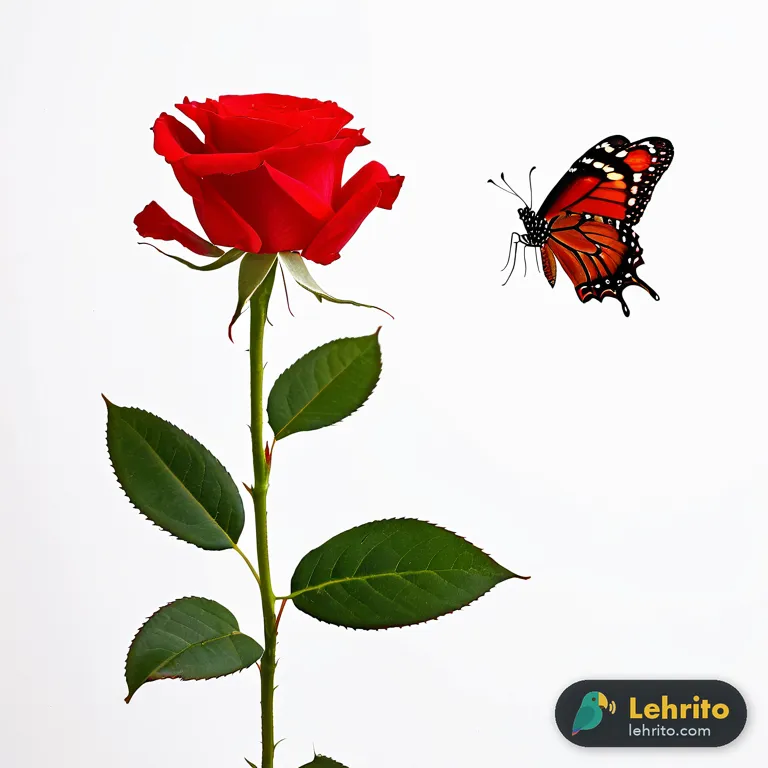
Definition
A thorny shrub widely cultivated for its beautiful, often fragrant flowers; a flower of this plant
To remember it
Picture the vibrant red flower with its green stem and leaves. Think of it as a rose, the beautiful bloom that smells so sweet.
Examples
- A1
He bought her a dozen red roses for their anniversary — not particularly original, she thought, but it was still a lovely gesture, and the roses were beautiful, velvety and deep red, with a rich fragrance that filled the whole flat when she put them in a vase with water on the kitchen table.
- A1
There's a beautiful old rose bush in my grandparents' garden that has been there for decades — it blooms every summer in deep pink, and my grandmother always says it was there when they moved into the house forty years ago, so she has no idea what variety it is or where it originally came from.
- A2
The sun rose slowly over the mountains, painting the sky in shades of orange, pink, and gold — one of those still, perfect moments at dawn when the world seems to hold its breath before the day begins in earnest, and even the birds pause in their singing for a few seconds as the first rays of light break the horizon.
- A2
The walls were painted a warm shade of rose — not quite pink but not quite red either, with a warmth that made the room feel welcoming and comfortable without being garish or overpowering, and the white curtains and light wooden furniture complemented the colour beautifully in the late afternoon light.
- B1
The Wars of the Roses (1455–1487) were a series of civil wars between the Houses of York and Lancaster for control of the English throne; the name comes from the badges used by the two factions — the white rose of York and the red rose of Lancaster — and the conflict ended with the victory of Henry Tudor (who became Henry VII) at the Battle of Bosworth Field, uniting the two roses in the Tudor rose and establishing the Tudor dynasty that would produce Henry VIII and Elizabeth I.
- B1
The phrase "everything comes up roses" — meaning that everything is going or will go extremely well — is an optimistic idiom typically used either to describe a genuinely fortunate run of events or, more often, ironically to suggest that a situation is more complicated or problematic than the speaker's surface cheerfulness suggests; the expression comes from a lyric in the musical Gypsy (1959) and has become a common expression in everyday English for describing situations of unexpected good fortune or positive outcomes.
- B2
The cultural history of the rose in Western civilization is extraordinarily rich: the rose was sacred to Aphrodite and Venus in Greek and Roman mythology; it symbolised secrecy in the medieval tradition (sub rosa — "under the rose" — meant in confidence and not to be disclosed); it was associated with the Virgin Mary in Christian iconography; it became the national flower of England and symbol of the Tudor dynasty; and in contemporary romantic culture it remains the pre-eminent symbol of love, desire, and beauty; the genus Rosa comprises hundreds of species and thousands of cultivated varieties, bred over millennia for colour, fragrance, form, and disease resistance.
- B2
Gertrude Stein's famous line "A rose is a rose is a rose is a rose" — from her poem "Sacred Emily" (1913), later incorporated into her prose — has been interpreted in many ways: as a celebration of the immediate, pre-conceptual reality of the rose before it is overlaid with the accumulated cultural associations of centuries; as a playful circular tautology that draws attention to the nature of language and reference; or as an assertion of the thing-in-itself against the tendency to reduce objects to their symbolic or instrumental value; the line has been widely quoted, parodied, and repurposed in a variety of contexts since its initial publication.


