

island
Definition
A piece of land that is completely surrounded by water and smaller than a continent
To remember it
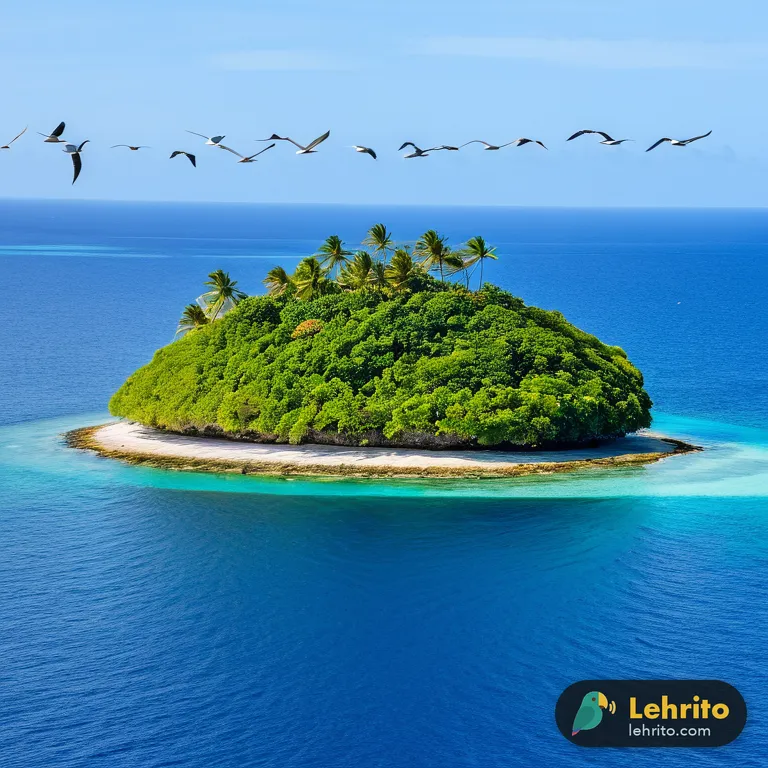
Picture the lush green island surrounded by crystal-clear blue water. Think of it as a small piece of land in the middle of the ocean, where you can find palm trees and birds flying overhead.
Examples
- A1
Cuba is a large island in the Caribbean Sea and it is the biggest island in the Caribbean region, with beautiful beaches and a rich cultural heritage that attracts tourists from all over the world.
- A1
We took a short boat trip to the small island near the coast where there was a lighthouse and a few old buildings, and we spent the afternoon walking around and enjoying the views of the sea.
- A2
Japan is an island country in East Asia made up of four main islands — Honshu, Hokkaido, Kyushu, and Shikoku — along with thousands of smaller islands scattered across the surrounding seas, giving the country a very long coastline relative to its total land area.
- A2
The family saved for several years to take a holiday on a tropical island where they could swim in warm, clear water, lie on white sandy beaches, and try fresh seafood at the local restaurants.
- B1
Island ecosystems are often characterised by high levels of endemism — species found nowhere else on Earth — because geographic isolation over thousands of years allows evolution to proceed along unique paths, producing animals and plants that have adapted specifically to the local environment without competition or predation from mainland species.
- B1
Rising sea levels caused by climate change pose an existential threat to many low-lying island nations in the Pacific and Indian Oceans, with some countries like Tuvalu and Kiribati facing the prospect of losing most or all of their land to flooding within the lifetimes of people currently alive, raising complex questions about national identity, sovereignty, and refugee status for entire populations displaced by environmental change they contributed little to causing.
- B2
The history of Pacific island navigation represents one of humanity's greatest achievements of geographical knowledge and practical seamanship: Polynesian peoples who settled islands spread across millions of square kilometres of open ocean using traditional navigation techniques based on stellar observation, wave pattern reading, bird behaviour interpretation, and oral knowledge traditions encoded in chants and songs that preserved the routes and landmarks needed to travel between islands separated by thousands of kilometres of open water without any written charts or instruments.
- B2
The concept of "island biogeography" developed by ecologists Robert MacArthur and E.O. Wilson in the 1960s provided one of the most influential theoretical frameworks in ecology by demonstrating that the number of species that can coexist on an island (or in any habitat patch isolated from others) is determined by the balance between immigration rates (which decline as an island becomes more species-rich) and extinction rates (which increase as the island becomes more crowded), with the equilibrium species number predictably related to island size and distance from the source of potential immigrants.


