

spider
Definition
An eight-legged arachnid (order Araneae) that typically has a body divided into two parts (cephalothorax and abdomen), produces silk used to construct webs for catching prey, and is found worldwide in a wide range of habitats; (computing) an automated program that systematically browses the web to index content.
To remember it
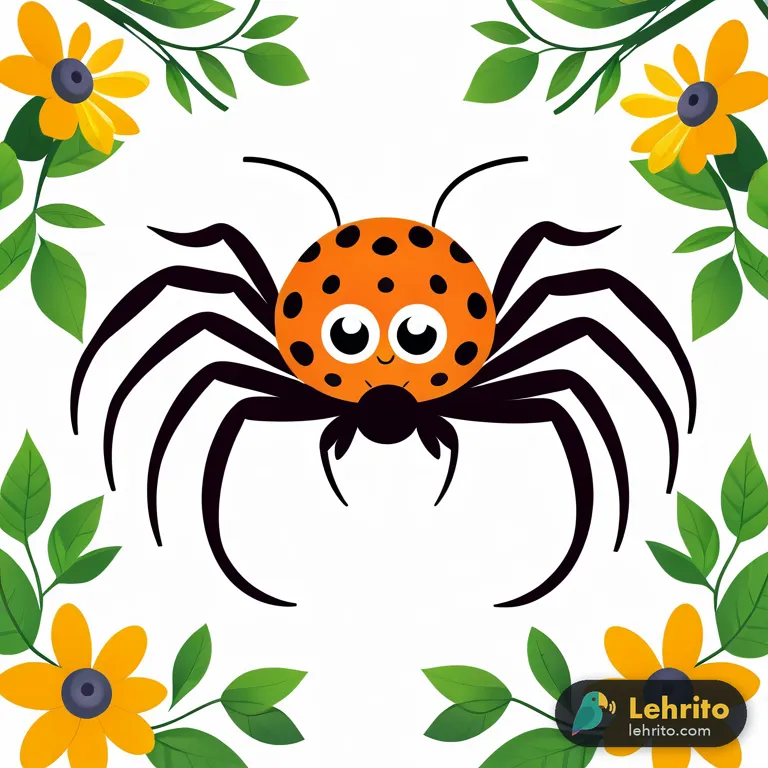
Picture the big, round spider with black spots and long legs. Think of it as a friendly creature that lives in dark corners, not scary at all!
Examples
- A1
I found a large spider in the bath this morning and had to use a glass and a piece of card to catch it and put it outside.
- A1
The spider spun a beautiful web in the corner of the window that sparkled with morning dew.
- A2
Many people are afraid of spiders even though most species are harmless to humans and play an important role in controlling insect populations.
- A2
The biology teacher brought a tarantula to the classroom and explained that spiders are arachnids, not insects, because they have eight legs rather than six.
- B1
Spider silk is one of the strongest natural materials known — weight for weight, dragline silk (the structural silk used in web frames and as a safety line) is five times stronger than high-grade steel and three times tougher than Kevlar; researchers have long sought to produce it at scale, and recent approaches include transgenic goats that produce silk proteins in their milk and microbial fermentation systems that express spider silk genes.
- B1
Arachnophobia — fear of spiders — is one of the most common specific phobias, affecting an estimated 3–15% of people globally; evolutionary psychology has proposed that it may be a prepared learning response (humans are biologically predisposed to rapidly acquire fear of potentially dangerous stimuli) shaped by the genuine danger that venomous spiders posed to our ancestors, though cross-cultural prevalence differences suggest cultural transmission also plays a significant role.
- B2
Web crawlers (also called spiders or bots) are automated programs that systematically navigate the web by following hyperlinks from page to page, downloading and indexing page content for search engines; major search engine crawlers (Googlebot, Bingbot) work at enormous scale, prioritising URLs based on link authority, crawl frequency, and freshness signals; they respect the robots.txt exclusion standard (which sites use to instruct crawlers not to index certain paths) and carry User-Agent headers that identify them as crawlers so that servers can apply rate limits.
- B2
The spider plant (Chlorophytum comosum) — a common houseplant named for the spider-like appearance of its trailing plantlets — is notable for its resilience, tolerance of neglect, and ability to produce offset plantlets that dangle from long stolons and can be propagated by placing them in soil; it was included in a NASA Clean Air Study that reported plants can remove certain volatile organic compounds from indoor air, though subsequent analysis has questioned whether the effect is significant under typical indoor ventilation conditions.
Synonyms
Tags


