

bird
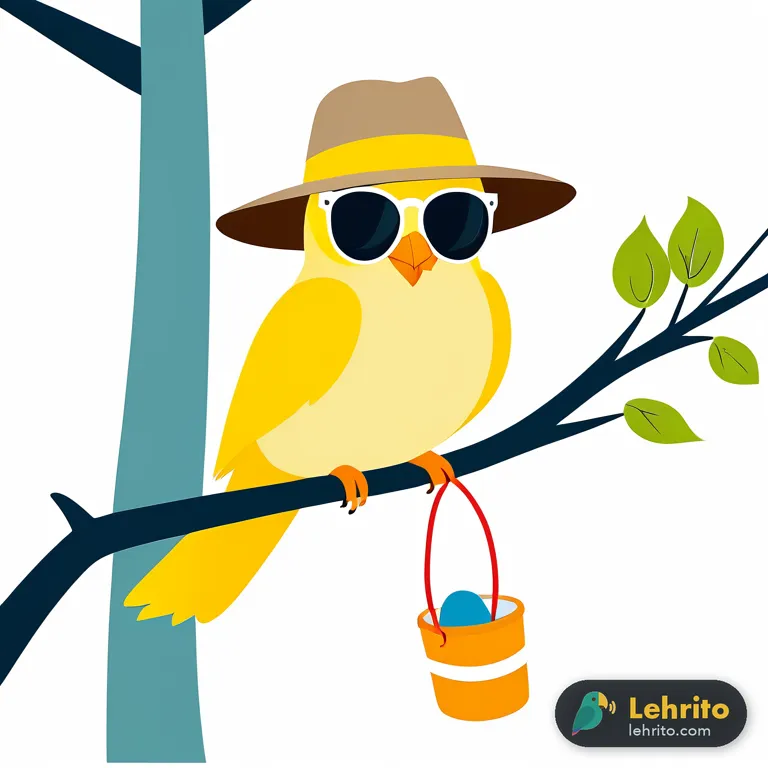
Definition
A warm-blooded egg-laying vertebrate animal with feathers, wings, a beak, and a bone structure adapted for flight
To remember it
Picture the yellow bird wearing a hat and sunglasses, holding an orange bucket. This helps you remember 'bird' because it's a fun, colorful creature that you can easily spot in nature.
Examples
- A1
The birds in the garden were singing beautifully in the early morning — the combination of different species each contributing their own call created a rich, layered sound that she found deeply calming and that she was already starting to miss in anticipation of leaving for the city later in the week.
- A1
She kept a bird feeder in the garden and loved watching the different species that came to visit throughout the day — sparrows and finches in the morning, blue tits and great tits in the afternoon, and occasionally a robin who seemed to regard the garden as its personal territory and would chase away other birds who approached its feeding spot.
- A2
The ornithologist could identify over two hundred bird species by their calls alone — a skill developed over decades of careful listening and field work that allowed her to survey an area without needing to see the birds directly, by simply standing quietly and recording which calls she could distinguish in the soundscape around her.
- A2
Many bird species undertake extraordinary annual migrations — Arctic terns, for example, travel from their Arctic breeding grounds to Antarctica and back each year, covering approximately 70,000 kilometres, the longest migration journey of any animal; the navigation mechanisms that allow birds to make these journeys with such precision remain a subject of active scientific research.
- B1
The class Aves — birds — is the most species-rich group of tetrapods, with approximately 10,000 known species; they have colonised virtually every habitat on Earth from polar ice caps to tropical rainforests and from ocean surface to mountain peaks; and despite the apparent diversity in form and behaviour, all birds share the distinctive features of their theropod dinosaur ancestry: feathers, hollow bones, a keeled sternum (in most flying species), and the remarkable avian respiratory system.
- B1
The "dawn chorus" — the burst of birdsong that occurs in the hour before and after sunrise, particularly in spring — has attracted scientific study to understand its function: the most widely supported hypothesis is that territorial males are advertising their presence and fitness after surviving the night, with the specific timing (the precise order in which different species join the chorus) reflecting differences in eye size (larger eyes → better low-light vision → earlier singing start) and territory size.
- B2
Bird watching — or birding — has become one of the most popular wildlife hobbies in many countries, combining the pleasures of being outdoors in nature with the intellectual challenge of identification and the social enjoyment of the birding community; the growth of citizen science platforms like eBird has transformed birding from a purely recreational activity into a major data source for ornithological research, with millions of amateur birders generating distribution and population data that professional researchers could never produce alone.
- B2
The phrase "a bird in the hand is worth two in the bush" — meaning that a smaller but certain benefit is more valuable than a larger but uncertain one — captures a real cognitive bias documented in behavioural economics: people systematically prefer certain outcomes over probabilistically equivalent gambles (risk aversion), and this tendency, while sometimes rational, can also lead to overly conservative decision-making that forgoes large expected gains for small certain returns.


