

sleep
Definition
A natural periodic state of rest in which consciousness is suspended
To remember it
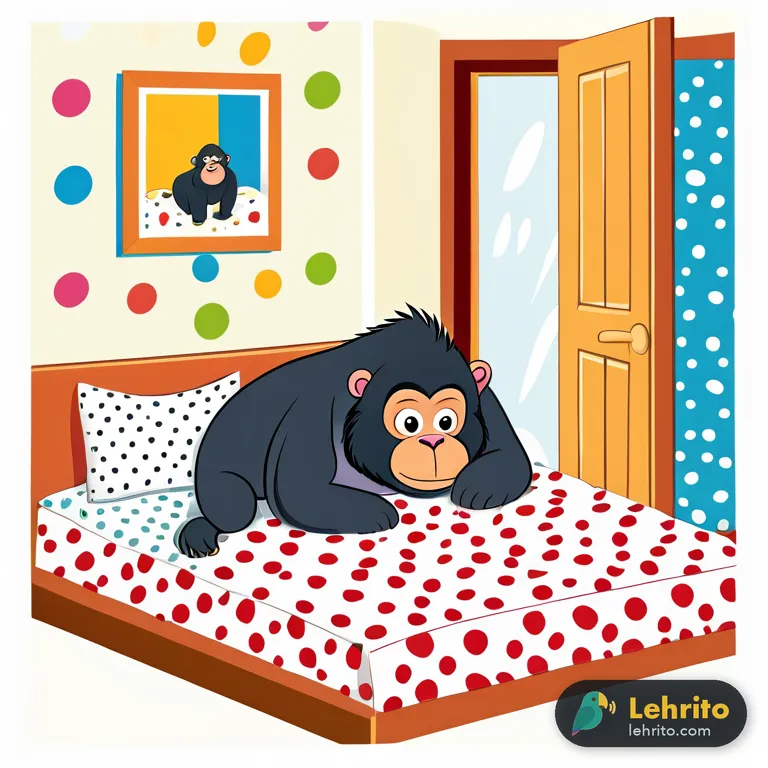
Picture the chimpanzee lying on a bed with colorful polka dots. Think of how the animal is resting, which means 'sleeping'.
Examples
- A1
Young children need to sleep for at least ten hours every night to grow properly.
- A1
She fell asleep on the sofa and slept for three hours before waking up.
- A2
He could not sleep at all because he was too worried about the job interview.
- A2
Doctors recommend that adults get between seven and nine hours of sleep every night.
- B1
Sleep architecture describes the cyclic alternation between non-REM sleep, which itself has multiple stages of increasing depth, and REM sleep, where most vivid dreaming occurs; across a typical night, the proportion of deep non-REM sleep decreases while REM periods lengthen, a pattern that is disrupted in many sleep disorders and by alcohol, which suppresses REM sleep.
- B1
The circadian rhythm, the internal biological clock that regulates the sleep-wake cycle over approximately 24 hours, is synchronized with the external light-dark cycle by light-sensitive cells in the retina that signal to the suprachiasmatic nucleus in the hypothalamus; disruption of circadian rhythms through shift work, jet lag, or artificial light exposure at night has been linked to metabolic disorders, mood problems, and increased cancer risk.
- B2
The function of sleep remains one of the central unsolved questions in neuroscience; leading hypotheses include memory consolidation (evidence shows that sleep, particularly REM sleep, is crucial for transferring memories from hippocampal to cortical storage), synaptic homeostasis (sleep downscales synaptic connections that have grown during waking), and glymphatic clearance (the glymphatic system, which clears metabolic waste including proteins associated with Alzheimer's, is most active during sleep).
- B2
The cultural history of sleep reveals that the contemporary pattern of one consolidated sleep episode per night is historically unusual; pre-industrial Europeans commonly slept in two segments, a first sleep and a second sleep, with an hour or two of quiet wakefulness between them; the shift to monophasic sleep may have been driven by artificial lighting and the pressure to maximize productive hours, with implications for how we understand sleep disorders that involve middle-of-the-night waking.
Conjugations
sliːp
Present Simple
Past Simple
Present Perfect
Synonyms
Antonyms
Tags


